The Power of Email Marketing in Driving Ecommerce Sales
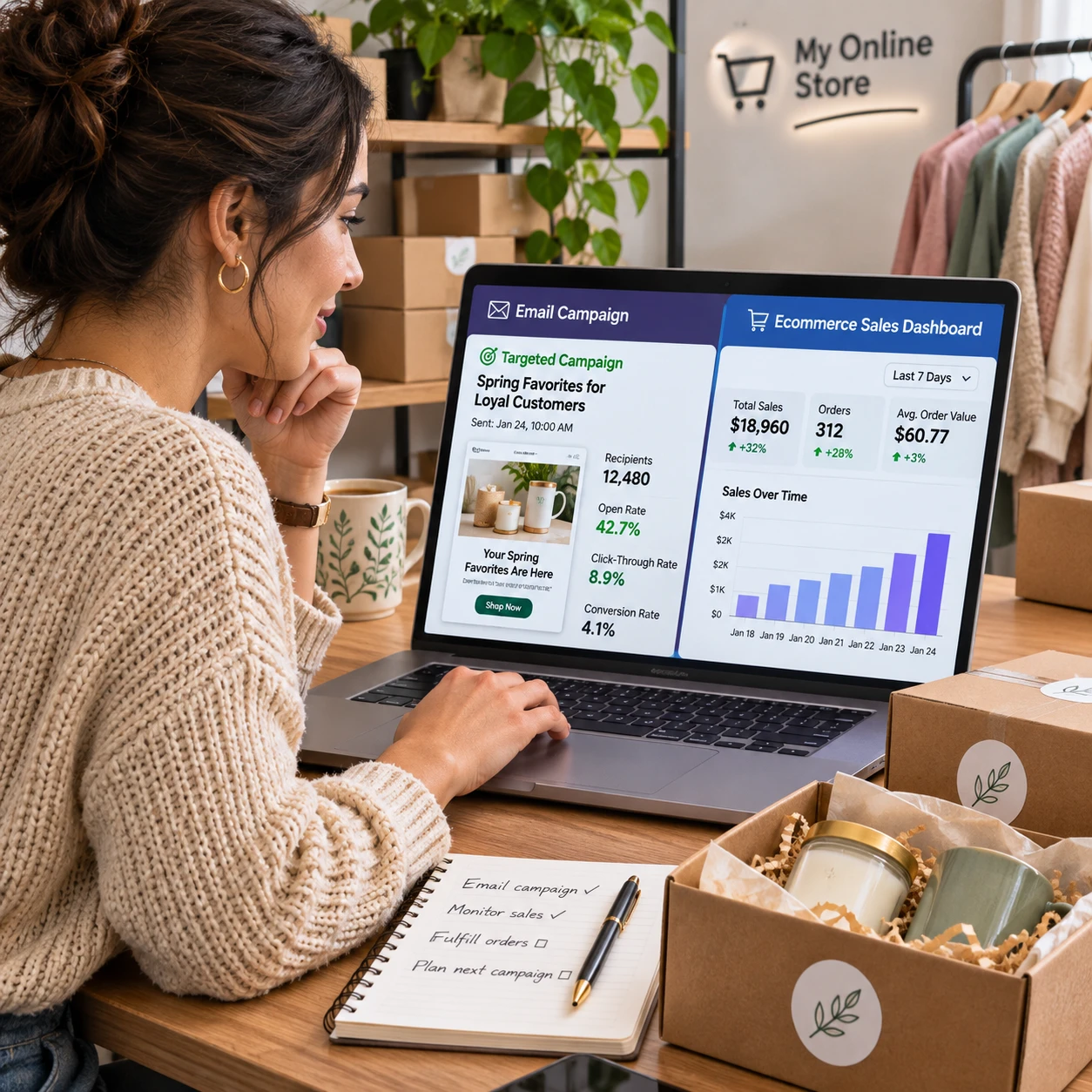
Email marketing gives an online store a direct way to reach shoppers with timely, relevant messages. Used thoughtfully, it can support a purchase, bring a customer back, or help someone find a product that fits their needs. Results are never guaranteed, but a permission-based email program can become a dependable part of ecommerce sales and customer retention.
Why email matters for ecommerce sales
Email marketing helps ecommerce businesses reach interested customers directly, support buying decisions, and encourage repeat purchases. Its value comes from connecting a useful message with a shopper’s needs and timing.
Unlike a one-time promotion, an email list gives your store an ongoing way to communicate with people who have chosen to hear from you. A welcome series can introduce your products and policies; a back-in-stock alert can reach someone who already showed interest. These messages can guide shoppers back to your store without requiring them to remember to check it themselves.
Email also supports customer retention. A well-timed product tip or replenishment reminder can make a second purchase easier, while a relevant product recommendation may help a customer discover an item that complements an earlier order. The trade-off is that inbox attention is limited: frequent, generic messages can erode trust and prompt unsubscribes. Treat every campaign as a reason to be useful, not simply a reason to send.
Build a quality email list
A quality email list consists of people who clearly agreed to receive messages from your store. Grow it through relevant sign-up opportunities and useful incentives, not purchased contacts.
Place a sign-up form where shoppers can understand what they will receive, such as a product guide, new-arrival updates, or occasional offers. Be specific about frequency when possible. If you offer a discount, explain the terms and deliver the promised benefit promptly. A first-order coupon may attract sign-ups, but a helpful sizing guide or care tips can also appeal to customers who are still deciding.
Keep consent clear and make unsubscribing straightforward. Purchased lists are a poor shortcut: recipients may not recognize your store, and low engagement or complaints can harm deliverability as well as your reputation. Collect only information you can use responsibly. An email address and an optional preference, such as interest in skincare or home goods, may be enough to begin.
- Use a sign-up form on relevant store pages, not only at checkout.
- State what subscribers can expect and how often you plan to write.
- Offer an incentive that fits your products and margins.
- Confirm sign-ups and keep consent and unsubscribe processes clear.
Create campaigns that move shoppers to action
Ecommerce campaigns work best when each email has a clear purpose and a next step that matches the customer’s situation. Welcome emails, product launches, promotions, and abandoned cart reminders each serve a different moment in the buying journey.
A welcome series can thank new subscribers, explain what makes the store distinctive, and help them choose a first product. Keep the first message focused; later emails can answer common questions or feature bestsellers. For a product launch, explain what is new and who may benefit rather than relying on a bare announcement. Promotional campaigns should make the offer, deadline, and any exclusions easy to understand.
Abandoned cart emails can remind shoppers about items they left behind, but a cart is not always a signal that someone is ready to buy. A shopper may be comparing options or waiting for more information. Start with a helpful reminder that links back to the saved cart. If appropriate, follow with details about shipping, returns, or product fit. Avoid implying urgency that is not real, and do not assume a discount is necessary for every recovery.
Personalize emails with customer segments
Customer segmentation groups subscribers by meaningful traits or behavior so an email can better match their interests. Purchase history, browsing activity, and stated preferences can help an online store send more relevant messages.
Start with simple groups: first-time buyers, repeat customers, subscribers who have not purchased, or shoppers interested in a product category. A customer who bought a coffee maker might appreciate compatible filters, while a first-time visitor may need basic guidance about materials, sizing, or delivery. Product recommendations are most useful when they reflect a real connection to the shopper’s previous interests.
Use behavior carefully. A viewed product can inform a relevant follow-up, but too much specificity may feel intrusive, especially if the message reveals sensitive assumptions. Let subscribers update preferences, and avoid building segments from data you do not need. More segments also mean more campaign work, so begin with a few groups you can serve consistently. Relevance matters more than complexity.
Improve conversions and the customer experience
To improve email conversion rates, make the message easy to understand, easy to use on a phone, and consistent with the page it opens. A clear call to action should lead to a relevant product or offer, not a confusing detour.
Use one primary action, such as “View the collection” or “Continue checkout,” and make its destination clear. Keep copy concise, show product details that help a decision, and include practical information such as shipping costs or return terms when it is relevant. Design for mobile screens: readable text, tappable buttons, and images that support rather than overwhelm the message.
The landing page matters as much as the email. If a campaign promotes a specific item, link directly to that item or a focused collection. Check that the offer, price, and availability match what the email says. A polished email cannot compensate for a slow, confusing, or out-of-stock destination. Test the whole journey, from inbox to checkout, before sending.
Measure results and refine your approach
Measure email performance with opens, clicks, conversions, and revenue, while treating each as a directional signal rather than a complete verdict. The right metric depends on the campaign’s goal.
For a product launch, click-throughs and resulting orders can show whether the message brought shoppers to the collection and supported sales. For a post-purchase email, clicks on care instructions may matter even if an immediate purchase was not the aim. Track conversion rate and revenue alongside unsubscribes, spam complaints, and delivery issues so short-term sales do not hide damage to list health.
Open rates are especially imperfect because privacy features and email clients can affect whether an open is recorded. Use them as context, not proof that a campaign succeeded. Compare similar campaigns over time, and change one important element at a time, such as the subject line, offer, audience, or call to action. A simple test is more useful when you know what question it is meant to answer.
Build loyalty beyond the first purchase
Post-purchase email can strengthen customer relationships by helping people get value from an order and offering a relevant next step. Follow-ups, replenishment reminders, and thoughtful cross-sells can support repeat purchases when their timing fits the product.
Start with an order confirmation and useful updates, then consider a message with setup, care, or usage advice. A replenishment reminder makes sense for consumable products when you can estimate a reasonable reorder window; it may feel irrelevant for durable goods. Cross-sell complementary items only when they genuinely fit the purchase, and give customers space between transactional updates and promotional campaigns.
There is no universal sending schedule. A small store can begin with a welcome series, a few planned promotional campaigns, and essential post-purchase messages, then watch engagement and feedback. Send often enough to remain useful, but let customer expectations and campaign performance guide the pace. Trust is part of the customer experience, and protecting it can matter more than squeezing one more promotion into the calendar.
Frequently asked questions
How often should an ecommerce store send marketing emails?
There is no fixed ideal frequency. Set expectations at sign-up, maintain a steady schedule your team can sustain, and adjust based on engagement, unsubscribes, and customer feedback. Avoid sending multiple promotions simply because there is a quiet spot on the calendar.
What types of emails help recover abandoned carts?
A concise reminder that links to the saved cart is a useful starting point. Follow-up messages can answer questions about shipping, returns, or product details. Discounts are optional, not a requirement, and should reflect your margins and promotion strategy.
How can a small online store grow its email list?
Offer clear sign-up forms on relevant pages, explain the value of subscribing, and provide an incentive that suits your products. Ask for permission directly and avoid purchased lists, which can undermine trust and deliverability.
Which metrics should an ecommerce store track?
Track clicks, conversion rate, attributed revenue, unsubscribes, complaints, and delivery signals. Use opens cautiously because privacy protections can make them unreliable. Match metrics to each campaign’s goal and compare like with like.