Creating Engaging Product Descriptions That Sell: A Practical Guide for Ecommerce Stores
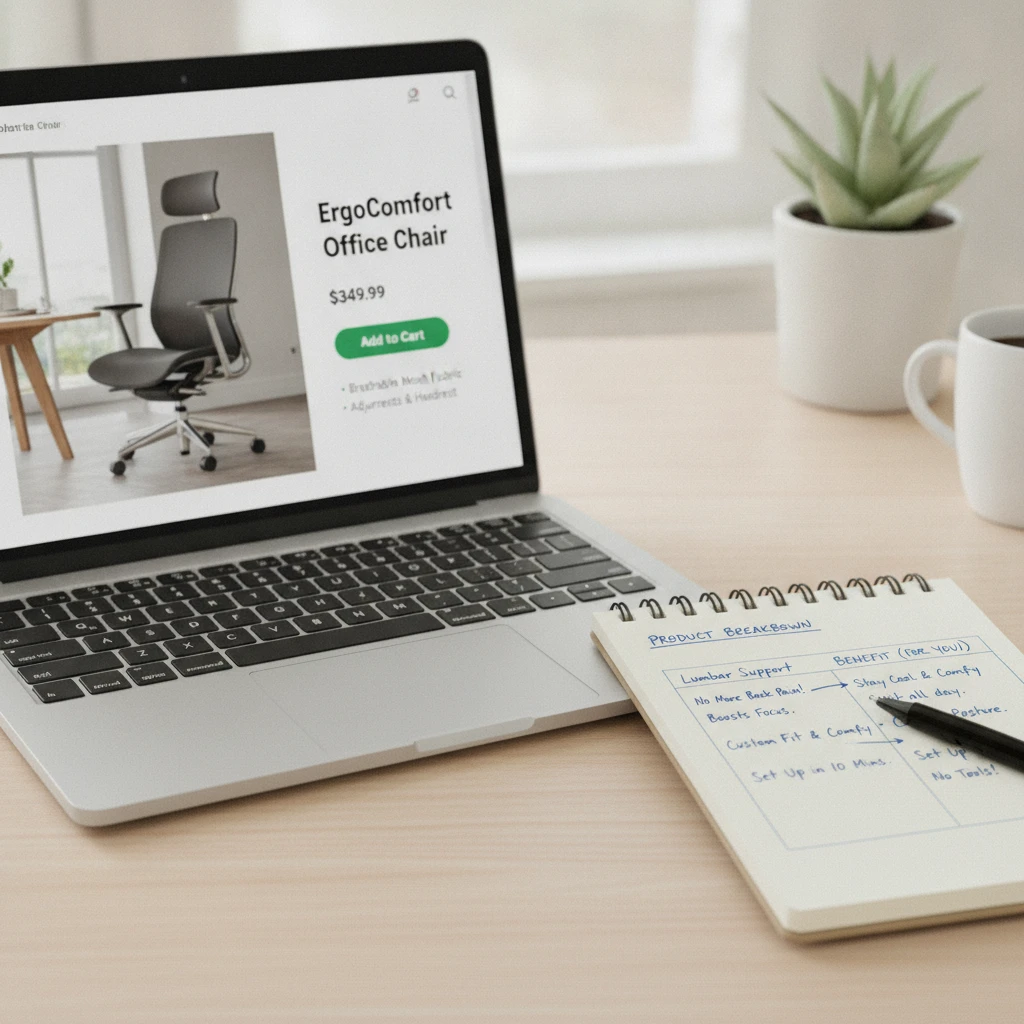
A strong product description helps shoppers decide whether an item fits their needs. It explains what the product is, shows why its features matter, and gives customers enough accurate detail to buy with confidence.
For an online store, that means writing for people first. A useful description can support ecommerce conversion and product page SEO, but it cannot compensate for unclear pricing, weak product images, or a poor checkout experience. Treat the copy as one important part of the product page, not a guaranteed sales fix.
Start with the shopper and their needs
To write a relevant product description, identify who is likely to buy the item, what they need, and what questions might stop them. Audience knowledge helps you choose useful details, an appropriate tone, and benefits that matter to real shoppers.
Start with what you know: product research, customer questions, reviews, support conversations, and the reasons people choose the product. Consider where and how they will use it, their level of experience, and what alternatives they might be comparing. A first-time buyer may need simple explanations, while a specialist may want precise specifications.
Build a quick shopper profile around three points:
- Goal: What is the customer trying to do or make easier?
- Concern: What uncertainty could prevent a purchase, such as fit, compatibility, care, or materials?
- Decision detail: Which product fact would help them compare options?
For example, a description for a compact travel mug should address more than its appearance. A commuter may care about capacity, dimensions, lid design, and whether it fits a bag or car cup holder. Include those details only when they are verified. Audience knowledge is a guide, not permission to assume every customer has the same priorities.
Turn product features into customer benefits
Product features describe what an item has or how it is made; customer benefits explain why those details may be useful. Connect each important feature to a practical outcome, while keeping claims accurate and specific.
A simple way to make the connection is to ask, “So what?” after each feature. If a backpack has a padded laptop sleeve, the benefit may be that it provides a dedicated place for a laptop. If a lamp has an adjustable arm, the benefit is that the light can be directed where it is needed. Avoid stretching that into a claim about preventing damage or reducing eye strain unless you have evidence for it.
Use a feature-to-benefit check:
- Feature: State the verifiable product detail.
- Use: Explain what the detail lets a shopper do.
- Boundary: Check that the benefit does not promise more than the product can deliver.
Your unique selling proposition (USP) should also be grounded in a meaningful difference. It might be a particular material, a specific size range, a repairable design, or an included accessory. If a competing product offers the same thing, it may still be useful, but it probably is not a distinctive USP. Clear evidence beats vague claims like “best quality” or “revolutionary.”
Build a clear, persuasive description
A persuasive product description gives shoppers a quick overview, explains the strongest relevant benefits, supplies decision-making details, and ends with a clear call to action. A consistent structure makes pages easier to write and easier to evaluate.
Try this flexible order:
- Opening: Name the product and its main use or audience. Lead with the most useful reason to consider it.
- Key benefits: Select two or three customer benefits and connect each to a real feature.
- Product details: Add specifications shoppers may need, such as dimensions, materials, compatibility, care instructions, or what is included.
- Call to action: Use a direct next step that matches the page, such as “Choose your size” or “Add to cart.”
For a desk organizer, an opening might explain that it keeps everyday stationery within reach. The next lines can describe the number and type of compartments, followed by exact dimensions and material. That gives the shopper a picture of its use and enough information to judge whether it fits their desk.
Keep the call to action helpful rather than theatrical. The page’s purchase button usually does the main work; the description should clarify what to do next, especially when the shopper needs to select a size, color, or configuration. A compelling structure supports a decision, but it cannot guarantee a sale.
Make the copy easy to scan and understand
Make product descriptions easy to scan by putting the most important information first, using concise sentences, and separating distinct details into short paragraphs or bullets. Specific, plain language helps shoppers find answers without working through a block of promotional copy.
Use familiar words and explain technical terms when your audience may not know them. Replace broad statements with verifiable specifics: give the actual dimensions instead of “spacious,” or list the fabric composition instead of calling it “premium.” If a measurement or performance detail is not available, do not invent one to make the copy sound complete.
Use bullets for details shoppers may want to compare quickly, such as:
- Measurements, capacity, or available sizes
- Materials, ingredients, or included components
- Compatibility, care instructions, or assembly needs
Keep related information together. Place sizing information near fit guidance, and explain compatibility beside the devices or products it applies to. This reduces the chance that a shopper will overlook a limitation. A longer description may be appropriate for a technical or configurable product; a simple item may need only a few focused lines. Use enough copy to answer real questions, not a word count chosen for its own sake.
Keep brand voice and product page SEO in balance
Good product page SEO uses the language shoppers search for while keeping the description clear, accurate, and consistent with your brand voice. Include relevant terms naturally in prominent copy, but do not repeat keywords at the expense of usefulness.
Begin with the product name and the terms that describe its type, material, intended use, or important variation. Add a phrase only when it accurately applies. For example, a product description for a cotton tote should not imply it is organic, waterproof, or made locally unless those claims are verified.
Brand voice shapes how the information sounds. A playful brand may use a light opening; a specialist retailer may use a more direct, technical tone. Either way, keep the details consistent. Warm copy cannot replace clear sizing, compatibility, or care information.
Search engines need understandable page content, and shoppers need useful answers. That overlap is the right place to focus: write an original description for each product, use natural wording, and avoid copying manufacturer text across many listings. Repeated descriptions can make products harder to distinguish for customers and reduce the uniqueness of your store’s content. SEO can help a page become more discoverable; it does not guarantee rankings or conversions.
Review and improve descriptions over time
Improve product descriptions by checking that every detail is accurate, the main benefit is easy to find, and the copy answers customer questions. Review them when product information changes and use customer feedback to spot gaps.
Before publishing, use this quick checklist:
- Accuracy: Do sizes, materials, compatibility, included items, and claims match the current product?
- Clarity: Can a shopper understand the main use and key benefit after a quick read?
- Completeness: Have you answered common questions about fit, setup, care, or limitations?
- Consistency: Does the description match the product images, options, brand voice, and rest of the page?
Pay attention to repeated customer questions, product returns linked to misunderstanding, and feedback from support or sales teams. Those signals can show where the copy needs a clearer measurement, compatibility note, or explanation. If you test different openings or calls to action, change one element at a time and allow enough traffic to compare results. A short test on a low-traffic page may not provide a reliable answer.
Keep a record of important product claims and their source, especially for technical specifications or regulated categories. That makes updates easier when a supplier changes a product or packaging. Accuracy matters more than keeping polished copy untouched.
Frequently asked questions
These answers cover common questions about product description length, originality, keywords, and the difference between a feature and a benefit.
How long should a product description be?
There is no single ideal length. Use enough copy to explain the product’s purpose, relevant benefits, and purchase-critical details. A simple accessory may need a brief paragraph and a few specifications; a technical product may need more explanation, sizing guidance, or compatibility information.
How do you write product descriptions without sounding generic?
Use details that distinguish the specific product, such as verified materials, dimensions, design choices, included parts, and intended use. Draw on real shopper questions, and replace broad praise with concrete information. A consistent brand voice helps, but unique facts make the description useful.
Should product descriptions include keywords?
Yes, when the keywords accurately describe the product and fit naturally into the copy. Use relevant product names and terms shoppers may use, but avoid repetition or awkward keyword lists. The description should still read like helpful guidance for a person choosing an item.
What is the difference between a feature and a benefit?
A feature is a product attribute, such as an adjustable strap or a 500-milliliter capacity. A benefit explains why that attribute may matter, such as making the fit easier to customize or showing how much the container holds. Benefits should follow from the feature without exaggerating what it can do.